
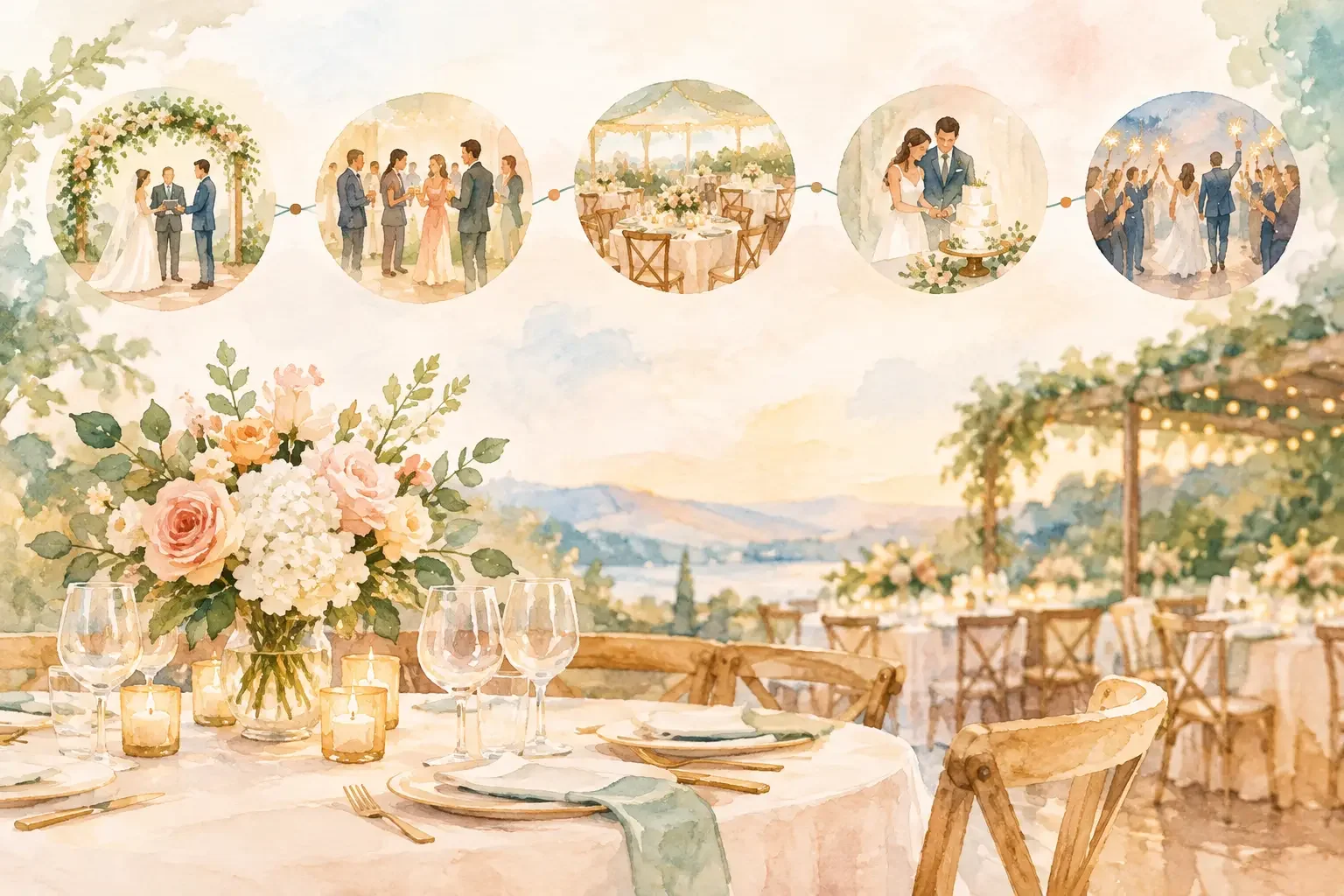
The reception rarely falls behind because one moment takes too long. It falls behind when no one knows what should happen next, who is meant to make it happen, or which moments can move without affecting dinner, photos, and guests. These reception timeline examples create a clear rhythm for the evening while leaving room for the joy you cannot schedule.
A useful reception plan is not a rigid script. It is a shared operating plan for the venue team, caterer, photographer, DJ or band, planner, wedding party, and family members handling special responsibilities. Build it around your actual priorities, then make the next step visible to the people who need it.
What reception timeline examples should account for
Most receptions follow the same broad arc: guests arrive, the couple enters, food is served, speeches are shared, the dance floor opens, and the evening closes. The details in between depend on the guest count, meal style, venue rules, family traditions, and whether you want portraits during cocktail hour or after dinner.
Start with the two anchors you are least able to change. The first is catering. A plated dinner needs a different pace than a buffet, food-station reception, or family-style meal. The second is your contracted end time. If music must stop at 10:00 p.m., last call, final song, and guest departure need to work backward from that point.
Then decide what deserves protected time. A first dance may need only three minutes, but a formal cake cutting can interrupt service if it happens at the wrong time. Toasts can feel warm and unhurried in a 15-minute window, yet become difficult if six people are invited to speak. Every addition asks something of the schedule.
Give each transition an owner
The moments between events deserve as much attention as the events themselves. Someone needs to cue the wedding party for an entrance, confirm that the photographer is ready for the first dance, and tell the caterer when speeches are beginning. Assigning ownership prevents the couple from becoming the evening's dispatch center.
A shared timeline should also identify what guests need to know. They do not need to see every vendor cue. They do need clear signals for dinner, dessert, transportation, and the final send-off. Give each group access to the details required for its role.
Reception timeline example: a five-hour evening
This is a balanced format for a 5:00 p.m. ceremony, a 5:30 to 6:30 p.m. cocktail hour, and a reception ending at 11:30 p.m. It works well for around 75 to 175 guests with a plated or family-style dinner.
- 6:30 p.m. - Guests enter the reception space. The bar is open, background music is playing, and the catering captain confirms that dinner service is ready to begin. If you are taking sunset portraits, let the photographer know the exact window when you can step away.
- 6:45 p.m. - Wedding party and couple entrance. Keep entrances brief. A grand entrance can be energetic without requiring every attendant to perform. Move directly into a welcome or first dance so guests understand the evening has begun.
- 6:55 p.m. - First dance, then a welcome. One dance and a short welcome create a strong opening. If you are including parent dances, they can happen here or later after dinner, depending on your preference and the flow of service.
- 7:05 p.m. - Dinner service begins. For a plated meal, allow 45 to 60 minutes before asking guests to turn their attention to speeches. For family-style service, build in a little more flexibility. A buffet may require table-release instructions and additional time for the last tables to return.
- 7:50 p.m. - Toasts. Plan for two to four speakers and set expectations in advance. A useful rule is three to five minutes per toast. Have the DJ, bandleader, or planner introduce speakers and keep the microphone moving.
- 8:15 p.m. - Parent dances and open dancing. Once the formal dances are complete, open the floor. This is also a natural time for the couple to visit tables, if that matters to you, although a table-by-table greeting can take longer than expected.
- 9:15 p.m. - Dessert or cake cutting. Cutting the cake earlier helps guests who leave before the end of the night and allows catering to begin serving dessert without a late rush. If you want a private cake cutting, skip the announcement and keep the timeline focused on dancing.
- 10:30 p.m. - Late-night food and final-photo window. A late snack gives the dance floor a second wind. It is also a good time for the photographer to capture a few final group photos or a room-wide image before some guests depart.
- 11:15 p.m. - Final song and exit. Confirm transportation pickup times, gather personal items, and assign someone to take gifts, cards, and any remaining decor. The exit should feel like a closing moment, not an unplanned evacuation.
The key trade-off in this version is dinner length. If your caterer needs 75 minutes for service, do not schedule speeches at the 45-minute mark just because the sample does. Let the meal determine the timing, then protect the dancing that follows.
Reception timeline example: a four-hour cocktail-style reception
A shorter reception can feel generous and full when the food, music, and movement begin early. This format suits a restaurant celebration, an afternoon wedding, or a guest list that prefers conversation over a long dance party.
For a 6:00 to 10:00 p.m. reception, welcome guests directly into cocktail hour at 6:00. Serve substantial passed bites and food stations from the start rather than treating them as a light prelude. At 6:30, gather everyone for the couple's entrance, a first dance, and a brief welcome.
From 6:45 to 7:45, invite guests to eat while the couple visits with family and friends. Schedule toasts around 7:30, once most guests have food and a drink in hand. Keep them concise, then move into parent dances or open dancing at 7:45.
At 8:45, serve dessert, cut the cake if you are having one, and make any final thank-you remarks. The last hour belongs to the dance floor, conversation, and a relaxed departure. Because there is less time, avoid packing in bouquet tosses, multiple games, a photo dash, and a formal exit unless they are genuinely meaningful to you.
Reception timeline example: a dinner-party reception
Some celebrations are designed around a long meal, thoughtful conversation, and live music rather than a packed dance floor. A dinner-party reception can be elegant without becoming slow, but it needs deliberate pacing.
After cocktail hour, seat guests at 7:00 p.m. and begin the first course shortly after. Place a short welcome before the meal or between the first and main courses. Save toasts for after the main course, when the room has settled but guests are not waiting too long for dessert.
At about 8:45, shift the atmosphere with a first dance, a live set, or a change in lighting. Dessert can follow at 9:15, with an espresso or after-dinner drink service that encourages guests to stay and connect. If dancing is a lower priority, a smaller dance floor and a later evening gathering can be a better use of the budget than a full four-hour band set.
This format depends on catering coordination. The venue and caterer should know exactly when speakers will pause service, when coffee begins, and whether the band needs a sound check during dinner. Small interruptions are more noticeable in an intimate room.
Make the timeline useful on the wedding day
A beautiful schedule is only helpful if the right people can find it when plans change. Create one detailed master timeline for the people running the event and shorter role-based versions for everyone else. Your photographer needs portrait times and family-photo groupings. Catering needs service cues, dietary notes, and the right contact for decisions. Guests need simple guidance, not vendor load-in details.
Include contact names, phone numbers, locations, and a backup decision-maker for every high-stakes moment. If the couple is unavailable for ten minutes, someone should still be able to approve a weather adjustment, find the transportation lead, or confirm that dinner can begin.
Wedumi can keep these role-specific details in one private workspace, including the day-of timeline, team shifts, guest information, seating details, and vendor briefs. For a venue with weak cell service, downloadable essentials help the people on site continue working from the same plan.
Plan for movement, not just moments
Add realistic buffers for travel from ceremony to reception, room flips, bustle adjustments, restroom breaks, and family members who need extra time to gather. A 10-minute buffer is not wasted time. It protects the moments you care about from a delay that began somewhere else.
When something does shift, communicate the change to the smallest group that needs it. Guests do not need an announcement that portraits are running late. The DJ, caterer, photographer, and planner may simply adjust the entrance by ten minutes and preserve the rest of the evening.
The best reception timeline gives everyone clarity without making the celebration feel managed. Put the right details in the right hands, then let the evening breathe.