
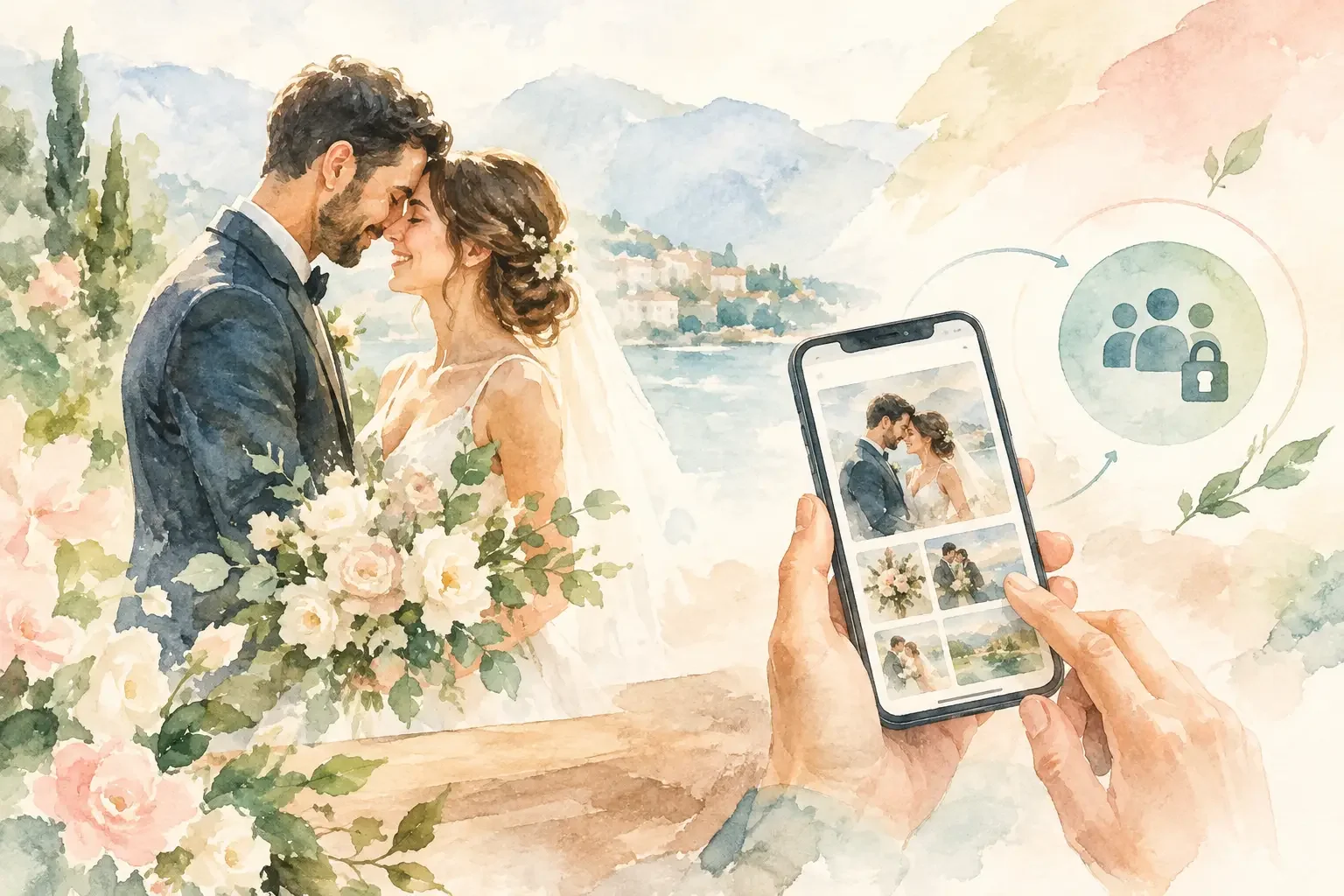
The first photos from a wedding rarely arrive in order. A cousin catches the ceremony exit from the third row. A friend uploads the dance floor twenty minutes later. The photographer’s gallery follows weeks after that. Private wedding photo sharing gives those moments a proper home, without asking guests to search old text threads, public social feeds, or several unfamiliar links.
For a coordinated celebration, photos are not only a keepsake. They are part of the event’s final handoff. Guests want to revisit the day. Family members want to save the portraits they missed. The couple may want to gather candid images before memories blur into a camera roll. A clear, private process makes that easy while respecting the people in every frame.
Why private wedding photo sharing needs a plan
Sharing photos can seem like a small detail until the wedding is over and everyone is using a different method. One person sends an upload link by text. Another starts a social album. A relative emails files that are too large to open. The result is familiar: duplicate images, uncertain permissions, and good moments that never make it back to the couple.
A private space changes the expectation. Guests know where to contribute and where to look. The couple knows who can access the collection. Organizers do not need to act as a help desk while trying to close out rentals, vendor questions, and final payments.
Privacy is also more than a password. It is a decision about audience. Some couples are happy for everyone invited to see every candid. Others want a smaller circle for getting-ready photos, family portraits, or images of children. Neither approach is difficult when access is intentional from the start.
Decide what “private” means for your wedding
Before choosing a photo-sharing setup, decide who should be able to view, upload, download, and manage images. Those are separate permissions, and treating them that way avoids awkward fixes later.
A guest-facing album might allow every invited guest to upload and browse candid photos. A smaller planning group may need the ability to organize albums, remove duplicates, or collect images for a slideshow. The couple may want final approval before selected images appear in a public-facing thank-you post. Clear roles protect both privacy and momentum.
Give guests one simple instruction
The best system is the one guests can understand while standing near the bar, not the one with the most settings. Put the photo space in the same private wedding workspace where guests already check the schedule, RSVP details, seating information, or day-of updates. Use a short instruction: add your favorite moments here.
Share that instruction more than once. Include it in the welcome message before the wedding, on a small sign near the guestbook or reception entrance, and in a follow-up note afterward. Repetition is useful when guests are balancing travel, conversations, and a full camera roll.
Avoid making QR codes the only route. They are helpful at the reception, but a written reminder and an easy-to-find destination matter just as much for guests who want to upload from home the next morning.
Set expectations for uploads
A private album works better when guests know what belongs there. Ask for candid photos, short videos, and moments the couple may not have seen. If you would rather not receive dozens of nearly identical ceremony photos, say so kindly. You might invite guests to keep phones away during the ceremony and save their camera roll for cocktail hour, dinner, and dancing.
It also helps to name a practical boundary. Guests should upload only photos they are comfortable sharing with the group. They should avoid posting images of private conversations, sensitive family moments, or children when a parent has asked for discretion. This does not need to feel formal. It is simply considerate hosting.
Build photo sharing into the wedding timeline
Photo sharing is most reliable when it is part of the plan, not an afterthought. Assign ownership before the event. A planner, sibling, or trusted member of the wedding party can check that the photo space is ready, place signage where guests will notice it, and send the follow-up reminder after the celebration.
This is a small responsibility with a real effect. On the wedding day, the couple should not be answering messages about where to upload photos. Their team should have the information required for their role, and the couple should have room for joy.
A practical timeline may look like this: introduce the private album with guest communications one week before the wedding; display the upload instruction at the reception; send a thank-you message two to three days later; then give guests a reasonable deadline to add their photos. Two or three weeks is often enough time for people to return from travel and sort through their images.
If the venue has limited reception, plan for it. Guests can take photos during the event and upload them later, provided they have a clear destination to return to. For key participants, downloadable essentials and a simple reminder in the day-of plan can prevent unnecessary confusion.
Keep professional and guest photos distinct, but connected
Guest photos and professional photography serve different purposes. Your photographer is responsible for a considered record of the day: portraits, details, ceremony coverage, and images shaped with skill and intent. Guest uploads capture the in-between moments: a grandparent laughing during a toast, friends gathering before the reception, the view from a table, or a late-night dance floor that no formal shot list could predict.
Both deserve a place, but they do not need to be mixed immediately. Consider separate albums for guest candid photos, professional previews, and final photographer images. This makes it easier for guests to browse without mistaking unfinished uploads for the final gallery.
The trade-off is simplicity versus curation. One combined album gives everyone a single place to look. Separate albums create a calmer experience and make it easier to preserve the photographer’s work as a finished collection. Choose based on how many images you expect and how much organization your group will realistically maintain.
Make access easy without making it open-ended
A private wedding space should feel welcoming, not restrictive. Guests should be able to find their photos without creating a public account or requesting permission from the couple days later. At the same time, access should not continue indefinitely by accident.
Set a review point after the wedding. Once the upload window closes, decide whether the album remains available to all guests, becomes view-only, or is limited to the couple and a small group of family members. If anyone asks for an image to be removed, have one person responsible for handling that request promptly and quietly.
This is especially helpful for weddings with a large guest count, blended families, workplace connections, or guests who may not know one another well. A thoughtful boundary lets people participate without feeling exposed.
Turn the collection into something people will revisit
An upload folder alone is useful, but a lightly organized collection becomes part of the memory of the day. After the deadline, create a few simple groupings: ceremony, cocktail hour, dinner, dancing, and behind the scenes. Add a small selection of favorites to a slideshow for a post-wedding gathering or a quiet evening at home.
Do not feel pressure to edit every image. The point is not to produce another polished photographer gallery. It is to preserve the perspective of the people who were there. A slightly blurry photo of a meaningful hug may matter more than a technically perfect image because it holds a moment no one else saw.
Wedumi can keep guest photo uploads alongside the timeline, guest details, albums, and notes that shaped the celebration, so the wedding does not dissolve into disconnected tools once the last song ends.
Choose a private photo-sharing process early, assign one person to keep it visible, and give guests a clear window to contribute. The best collection will not be the largest one. It will be the one your people can return to easily, with the right memories still intact.