
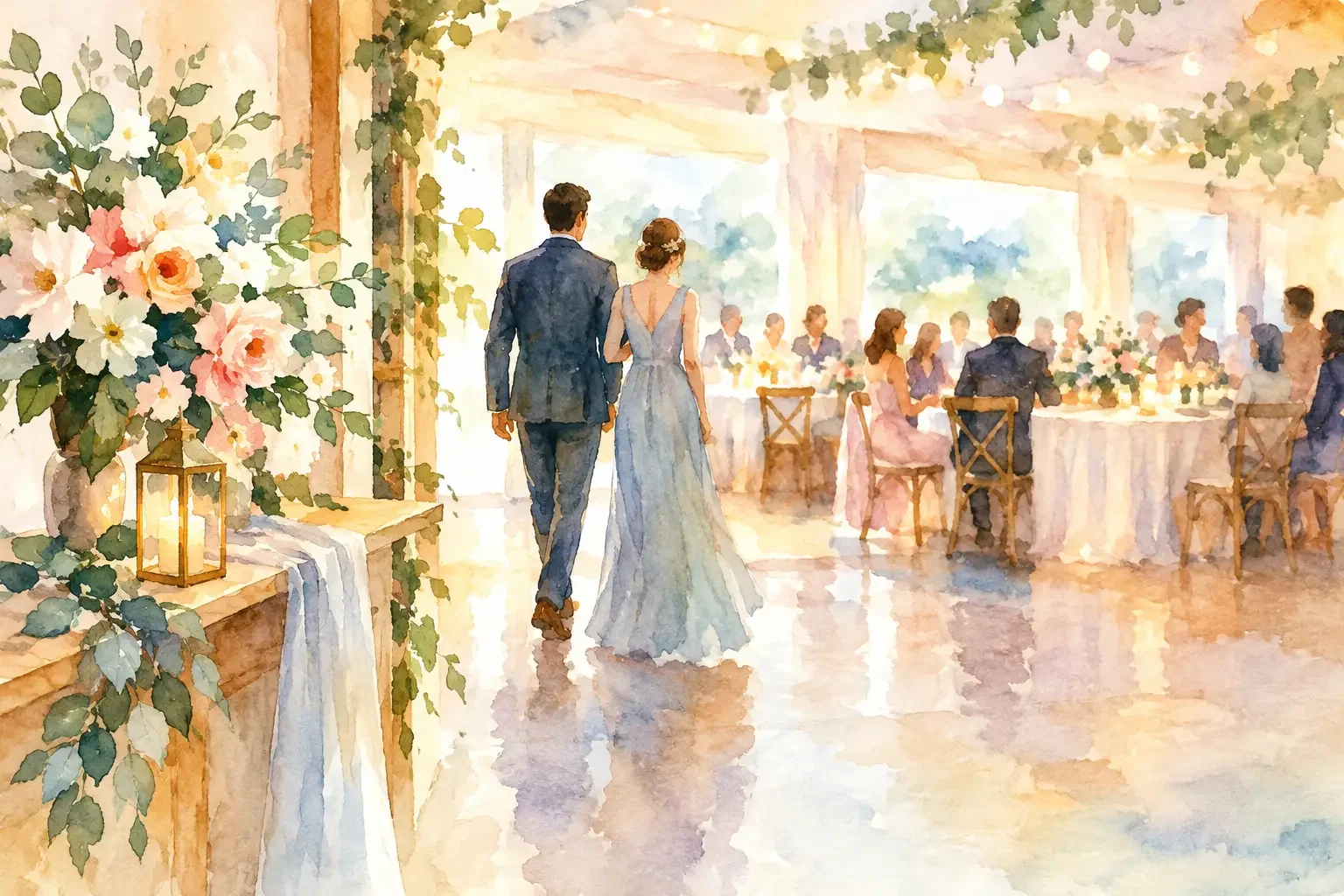
A reception rarely loses energy because one moment runs five minutes late. It loses energy when no one knows what happens next. Guests remain at the bar while dinner is ready. The photographer misses the first dance setup. A parent is asked to make a toast before they have found the microphone.
Knowing how to organize reception transitions means designing the handoffs between moments with as much care as the moments themselves. Each change should give guests a clear next step, give the right people enough notice, and leave room for joy rather than rushing it.
Start with the guest experience, not the run sheet
Reception transitions are the bridges between welcome drinks, dinner, speeches, dancing, cake cutting, late-night food, and farewell. A detailed schedule matters, but guests do not experience a schedule. They experience signals: where people are gathering, what music is playing, whether a drink is in hand, and whether it is clear that something is about to begin.
Walk through the reception in order and ask a simple question at every change: what will guests be doing for the next five minutes? If the answer is "waiting," give that waiting a purpose. Invite them to find their seats, refresh their drinks, sign the guestbook, or move toward the dance floor. A small instruction is better than a room full of uncertainty.
This approach also helps you spot transitions that need more time. Moving 120 guests from a cocktail patio to assigned seats is different from asking 40 guests to turn toward a sweetheart table. The route, mobility needs, weather, lighting, and distance to restrooms all affect the timing.
Build a reception transition plan around ownership
A transition should never rely on the couple noticing that something needs to happen. The couple should be free to greet loved ones, eat, listen, and be present. Assign one person to own each handoff.
For example, a venue coordinator may open the dining room and confirm seating is ready. A planner or trusted family organizer can cue the wedding party. The DJ or bandleader can make the announcement and shift the music. The caterer can confirm that service is prepared. Your photographer and videographer need advance notice when the next moment is visually significant.
Name one primary owner, then identify the people they need to notify. Avoid assigning a task to "the team" or assuming the DJ will coordinate every detail. A DJ can make a strong announcement, but they may not know that the caterer needs two more minutes or that a grandparent is still returning from the restroom.
For every major transition, record three details: the planned start time, the person who calls it, and the readiness check required before the call. This creates a practical decision point instead of a vague hope that everyone will be ready.
Use readiness checks for the moments that matter most
Not every change needs a formal confirmation. Guests can naturally drift back to the dance floor after dessert. But the moments involving food, formal attention, or photography deserve a quick check.
Before a grand entrance, confirm that the wedding party is lined up, the room is open, and the DJ has names and pronunciation notes. Before speeches, confirm that speakers are present, the microphone works, and catering knows whether to pause service. Before the first dance, make sure the dance floor is clear and the photographer is in position.
A short message such as "Dinner room ready. Parents are lined up. Caterer is set. Go in two minutes" keeps everyone working from the same picture.
Give every transition a cue guests can understand
Announcements are useful, but they are not the only cue. Guests may be talking, outside, helping children, or unable to hear clearly. The strongest transitions use more than one signal.
Music is often the most effective first cue. A shift from relaxed cocktail music to an upbeat entrance song changes the room before anyone speaks. Lighting can focus attention on the right area. Staff can open doors, guide guests, or begin clearing a space. A brief announcement then confirms the action.
Keep announcements warm and specific. "Please make your way to your table for dinner" is clearer than "We will be starting shortly." For an outdoor reception, tell guests where to go: "Join us under the tent for the first dance." If there is a delay, a calm update is better than silence: "Dinner service will begin in a few minutes. Please enjoy another drink and find your table."
Consider guests who need additional support. Make paths wide enough for mobility devices, avoid sudden moves through dark spaces, and give families with young children a little extra warning before loud music or a room change. Clear coordination is part of good hosting.
Plan the high-friction transitions first
Some reception changes are naturally easy. Others create bottlenecks, competing needs, or a sudden drop in energy. Plan the difficult ones before filling in the rest of the evening.
Cocktail hour to dinner
This is often the largest movement of the night. Start the invitation before dinner service is fully due to begin, particularly if guests need to collect escort cards or move between buildings. Ask the DJ or a designated host to make a first invitation, then a final call once the room is ready.
If formal entrances are planned, decide whether guests should already be seated. A seated audience gives the entrance focus, but it may extend the transition. If your priority is a relaxed reception, skip a large entrance and let dinner begin more naturally. Neither choice is better in every setting.
Dinner to speeches
Speeches work best when guests are settled and the room is not at its noisiest. Coordinate with catering so plates are not being placed or cleared during the first remarks. This does not mean service must stop for every toast. For several short speeches, a brief pause may be appropriate. For a long program, service may need to continue.
Keep a speaker order, a realistic duration, and a backup plan if someone is missing. The person managing the microphone should know who is next before the previous speaker begins.
Speeches to dancing
The transition into dancing needs a decisive cue. Avoid ending the final toast with a vague pause while people wonder whether they should stand, leave, or wait. Move directly into the first dance, parent dances, or an open-floor song that welcomes guests forward.
A strong opening song helps, but people also follow people. Ask the wedding party, close friends, or family members in advance to join the floor after the first dance. This is more reliable than hoping the room will fill on its own.
Dancing to the exit or after-party
Late-night transitions deserve the same attention as the opening. If you are serving late-night food, announce it before guests are already looking for a reason to leave. If there is a formal exit, state the timing early enough for guests to retrieve belongings and decide whether they will participate.
Do not assume every guest wants to stay until the end. Give a sincere goodbye opportunity earlier in the evening, especially for older relatives or guests with children. It protects the farewell from becoming another rushed task.
Share one live version of the plan
The most polished reception plan fails if it lives in separate text threads, paper copies, and memory. The people executing the evening need a shared view of what is next, what has changed, and who owns the decision.
Create a day-of timeline that shows transition windows, not only fixed timestamps. For instance, dinner may begin at 6:30 p.m., but the invitation to enter can begin at 6:20 p.m. Speeches may be planned for 7:45 p.m., with a note to begin once the final entree plates are cleared. Those windows let the team respond to the real pace of the room without losing the structure.
Give each person only the information needed for their role. Your caterer does not need every family-photo detail. Your photographer does need notice before the cake cutting. Your wedding party needs to know where to gather and when. A private workspace such as Wedumi can keep these role-specific details, shifts, vendor briefs, and the day-of timeline in one place, including downloadable essentials for venues with unreliable reception.
Print a concise backup as well. Technology is helpful, but the person calling the next transition should have the essential sequence and key phone numbers available without searching.
Protect a little flexibility
A well-organized reception is not one that follows every minute exactly. It is one where the team can make a good decision when the evening changes. A delayed shuttle, an emotional speech, unexpected rain, or an enthusiastic dance floor may call for an adjustment.
Build in small buffers around the transitions that matter most. Choose two or three moments that are non-negotiable, such as dinner service, a cultural tradition, or venue curfew. Let the rest remain adaptable. When the team understands the priorities, they can protect what matters without pulling the couple away from the celebration.
The best reception transitions are almost invisible to guests. They simply feel welcomed into the next moment, while the people behind the scenes know exactly what to do. Make the next step visible, and leave room for joy.